


Ricardo Ramos
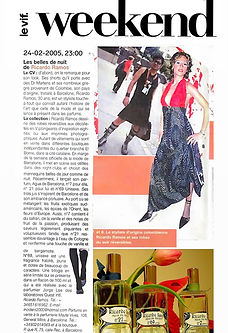
Ricardo Ramos is a major pioneer of artistic perfumery in Spain and one of the most disruptive figures in the sector globally. At the end of 2004 in Barcelona, Ramos made history by becoming the first creator to use the term "de Autor" (niche/signature) to advertise his first commercial fragrances in the press. Furthermore, he holds the historic milestone of being the first perfumer of Hispanic-American origin (Colombia) to establish his activity as an independent creator of artistic perfumery in European territory.

Currently based in Granada, Spain, his brand stands out for its strictly independent model, where each of his olfactory creations is weighed and packaged by hand using artisanal methods and made to order. This fierce defense of perfume as an artistic expression is precisely why Ramos operates by prioritizing a limited-batch auteur model over the mass distribution commercial criteria the industry aspires to. He maintains a position of absolute creative sovereignty, choosing to connect directly with the international community without necessarily depending on specialized boutiques or submitting to the commercial success demands required by corporate standards.
THE ACADEMIC UNIVERSE OF RICARDO RAMOS AND ITS OLFACTORY Expression
The genius and international distinctiveness of Ricardo Ramos lie in the fact that he does not structure his perfumes from a purely chemical or commercial perspective, but rather as the convergence of four academic disciplines enriched by his global cultural immersions.

Photo by Micha Sc (MS-Photography Berlin), Model: Jenny Buka, Hair & MUA by Patricia Piatke

His background in Fashion Design (Paris American Academy in Paris, France, and Westminster in London, England) grants him the ability to structure fragrances under the codes of haute couture and classical tailoring. Ramos conceives the olfactory pyramid through spatial concepts such as volume, silhouette, drape, and the weight of raw materials, transforming each perfume into an invisible garment designed to clothe and move with the skin.
Textile Art, History of Textiles, and Textile Conservation (Escuela de Artes y Oficios de Granada, Spain, and Lemark Institute, Mumbai, India). Specializing in traditional Indian textile design and the conservation and restoration of rugs and tapestries, Ramos translates the tactile experience into the sense of smell. His expertise allows him to infuse his compositions with specific sensory textures, molecularly emulating the sumptuousness of velvet, the lightness of linen, the mysticism of oriental silks, or the roughness of wool, seeking a direct bridge between the weave of a textile and the evolution of a scent (as evidenced in his work Kilim Bazaar)


Perfumery (MG International Laboratories, Istanbul, Turkey).
This is the pillar of his sovereignty in the laboratory. This rigorous technical immersion granted him the chemical and molecular knowledge necessary to personally weigh, formulate, and assemble his own creations. It is the technical bridge that allows him to execute the complex olfactory pyramids he designs on his own, as well as to express his requirements and technical contributions when working in collaboration with other perfumers.
Medieval Paleography, "Digging Deeper" Program (Stanford University, USA)
This is the scientific tool driving his highly acclaimed olfactory archaeology projects. His expertise in reading, interpreting, and transcribing ancient manuscripts and historical documents grants him the unique ability to access medical recipes, forgotten commercial formulas, and medieval historical texts.Ramos translates these ancient texts and integrates them into his creations, interpreting them as he did for the Book of Hours suite. This work bridges art history, literature, and the olfactory dimension of Europe's past, and was presented during the Smell Culture Fair at the historic Trippenhuis building in Amsterdam. The Smell Culture Fair was held within the framework of the closing ceremony for Odeuropa, the first major European research project dedicated entirely to olfactory European heritage.

Cultural immersion and travel around the world
This dense academic background is complemented by his globetrotting vocation and polyglot skills, which have taken him on extensive research journeys across diverse latitudes on a global scale. These expeditions allow him to study the impact, relevance, and anthropological use of olfactory culture in different eras and civilizations. Thanks to this, Ramos is able to olfactory integrate—with historical and cultural rigor—everything from Asian mysticism, Andalusi historical traditions, and European cultural legacy, to the botanical and literary heritage of Hispanic America.

Ricardo Ramos with a specimen of the Tolu balsam tree, Cartagena Scent 2026


CULTURAL MANAGEMENT AND INTERNATIONAL DISSEMINATION OF OLFACTORY CULTURE
The work of Ricardo Ramos transcends creation in the laboratory; his figure is consolidated internationally as that of a reputable cultural manager, researcher, and lecturer. Through his sensory presentations and milestones in management, Ramos leads a global crusade to reclaim the invisible history of scent and educate new generations on the olfactory heritage of Europe, Asia, and Latin America.
Cultural Management Platforms and Milestones
Ricardo Ramos has founded and directed two major platforms for independent and heritage perfumery within the Spanish-speaking axis:
-
GranadAroma (Granada, Spain): Creator and creative director of the first international event for artistic and independent perfumery in Spain. Organized in collaboration with the Granada Chamber of Commerce for its inaugural edition, this annual festival in March gathers niche creators and collectives from all over the world—including Germany, Italy, Sweden, Chile, the United Arab Emirates, and Saudi Arabia—in an interactive exhibition open to the public. The gathering combines workshops, artistic raw-material exhibitions, and lectures on neuroscience and history, concluding with the Premios Granada Fragante (Fragrant Granada Awards), featuring pomegranate-shaped trophies designed by Ramos and handcrafted in traditional Fajalauza ceramics.
-
Cartagena Scent (Cartagena, Colombia): Co-creator and director of the first event entirely dedicated to Colombia's olfactory heritage, held in alliance with the spice house Spicarium and supported by MANE Andina through their materials and technical resources. It operates as an anthropological epicenter for the historical rescue of domestic raw materials, sensory education, and the projection of Caribbean and Andean olfactory identity toward global markets.
Thematic Repertoire and Historical Reclamation
With a strictly academic and anthropological approach, Ramos delivers sensory lectures where the audience interacts directly with the raw materials discussed. His main lines of research encompass:
-
The Cradle of European Perfumery: Through his flagship lecture on The Olfactory Heritage of Al-Andalus in European Perfumery, Ramos has spent over ten years reclaiming for Spain the true origins of alcohol-based European perfumery, demonstrating the technical and cultural impact of the Andalusi legacy.
-
Latin American Identity and Sustainability: He promotes the impact of his native region through presentations such as The Legacy of Latin America in Contemporary Perfumery, Colombian Vanilla, and Crops for Peace and Odoriferous Substances in Colombia. In the latter, he presents his field research on native Vanilla planifolia from Chocó and the use of ancestral botanicals (Viche, Pipilongo) as tools for social and comprehensive development to counter illicit crops, among others.
-
Global and Technical Evolution: He analyzes the technical and sociological trends of the industry in lectures like The History of Perfume Oil (Attars) and Transculturality in Contemporary Perfumery.


Lecture Tour Across Global Venues
The voice of Ricardo Ramos has resonated in major academic institutions, museums, and congresses across Europe, Asia, and the Americas:
-
Europe: He has presented his historical research and his debut work Maverick's Rose at the Instituto Cervantes in Prague (Czech Republic); he has exhibited Andalusi mysticism at the Medina Azahara archaeological site (Córdoba, Spain); and he has actively participated in the Polaris independent perfumery fair in Stockholm (Sweden) and the Barcelona Perfumery Congress (Barcelona, Spain).
-
Asia: He holds the historic milestone of being the first Spanish-speaking lecturer to deliver a presentation at the prestigious Notes Shanghai perfumery fair in China, where he introduced his high botanical perfumery creations in oil format.
-
Latin America:
-
In Colombia, he has brought his sensory classrooms to the Alumni Association of the Universidad de los Andes (Uniandinos), the Virgilio Barco Public Library in Bogotá, and, uniquely, aboard the flagship of the Colombian Navy, the ARC Gloria.
-
In Chile, he participated as a featured speaker at the Chile Inspira perfumery fair.
-
-
Symposiums and Museums: He has had high-impact virtual participations, notably his intervention in the First American Symposium on Perfume Culture, a joint effort organized by the MUPE (Perfume Museum of Mexico City), the Latin American Center for Humanistic Studies of Aromas and Perfumes, and the Perfume Museum of Buenos Aires (Argentina).
Olfactory Archaeology in Action: "The Olfactory Footprint"
The greatest testament to his work as a cultural manager is the practical application of his research. Within the framework of Cartagena Scent 2026, Ramos presented the molecular restoration he carried out on the two most iconic commercial perfumes of the 20th century in the Colombian Caribbean: Limas de Turbaco(1960s) and Canalla (1970s) by master perfumer Raimundo Lecompte Diazgranados.
After tracking down and accessing the original chemical formulations—thanks to master perfumer Raimundo Lecompte de Pombo (the third generation of the Lecompte perfuming family from Cartagena)—Ramos technically interpreted the original formulas. He replaced the obsolete and banned molecules under contemporary international regulations with safe, modern biotechnological alternatives. This project was developed at the facilities of the multinational company MANE Andina (Medellín, Colombia). The research was presented as part of an emotional sensory and artistic installation titled "La Huella Olfativa Colombiana" (The Colombian Olfactory Footprint) in the historic center of Cartagena, allowing the community to physically and interactively reclaim their historical olfactory memory.

